
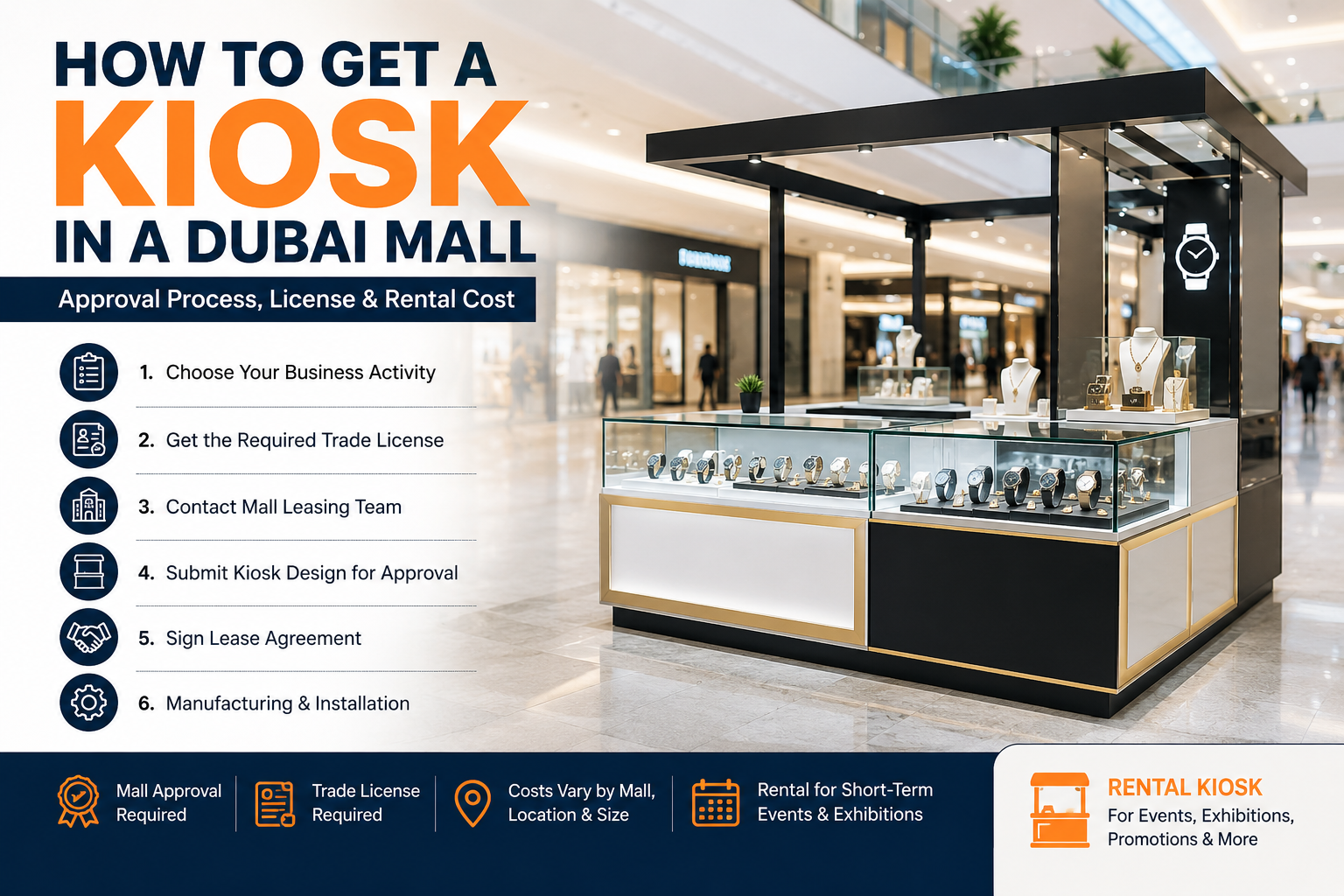
How to Get Approval for Mall Kiosk in Dubai: Process, License & Rental Cost
Dubai is home to some of the world’s busiest shopping malls, making it an attractive place for businesses to reach customers. From food and beverages to jewelry and mobile accessories, mall kiosks offer an affordable way to start selling without opening a full-size retail store.
If you’re planning to open a kiosk in a Dubai, it’s important to understand the approval for mall kiosk process, licensing requirements, and the costs involved before getting started.
This guide explains everything you need to know.
Why Mall Kiosks Are Popular in Dubai
Mall kiosks are ideal for businesses that want a professional retail presence while using less space than a traditional shop. They are commonly placed in walkways and open areas where visitors can easily see the products.
Many businesses choose kiosks because they:
- Require less space than retail stores
- Offer good visibility inside shopping malls
- Help introduce new products to customers
- Can be customized for different business types
- Are suitable for both new and established brands
Today, kiosks can be found in almost every major shopping mall across Dubai.
Table of Contents
Types of Mall Kiosks
Different businesses require different kiosk designs. The layout, storage, branding, and display are usually customized according to the products being sold.
Some of the most common kiosk types include:
- Food kiosks
- Coffee kiosks
- Ice cream kiosks
- Jewelry kiosks
- Mobile accessory kiosks
- Perfume kiosks
- Cosmetics kiosks
- Gift kiosks
- Dessert kiosks
- Beverage kiosks
Every kiosk is designed to suit the available space and the mall’s design requirements.
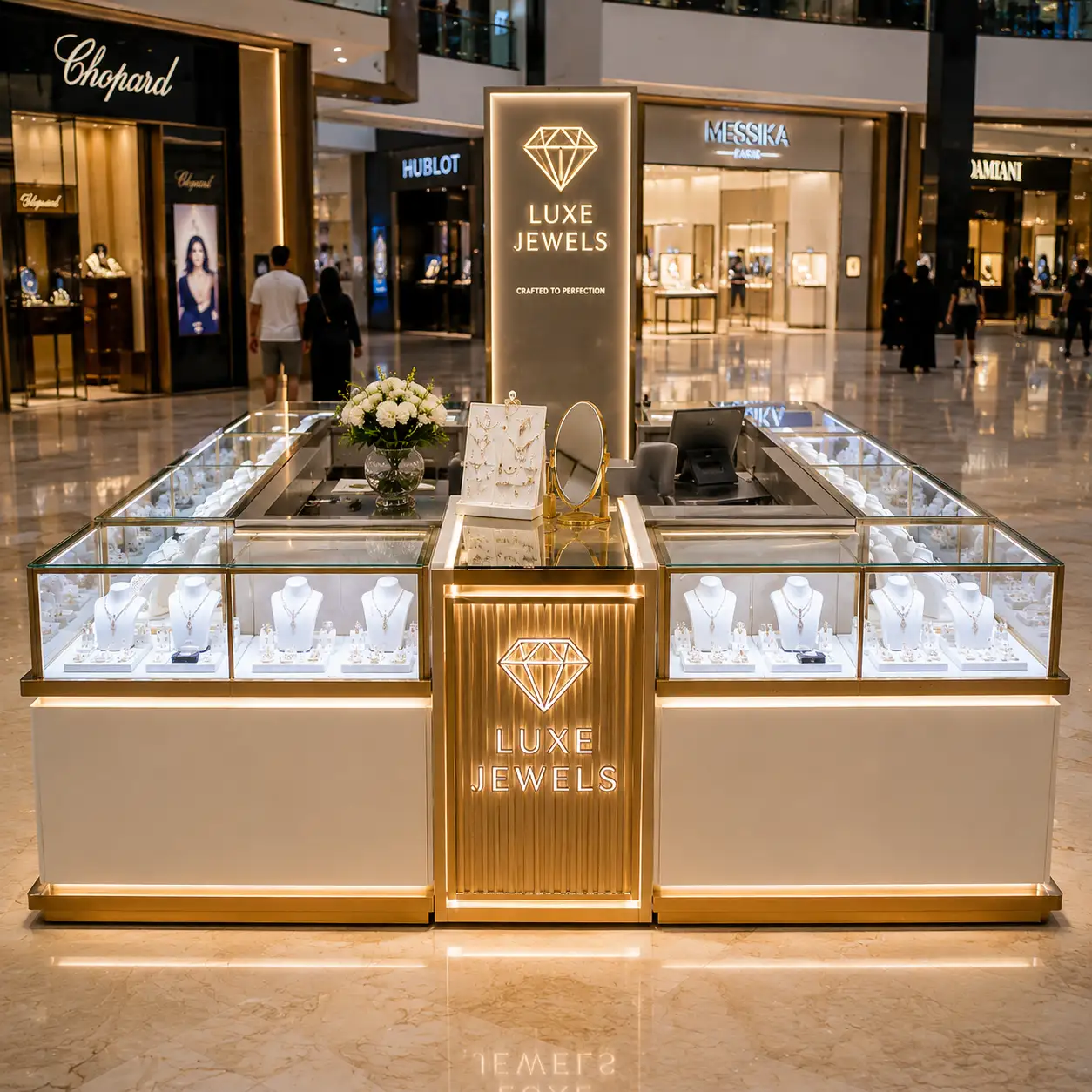
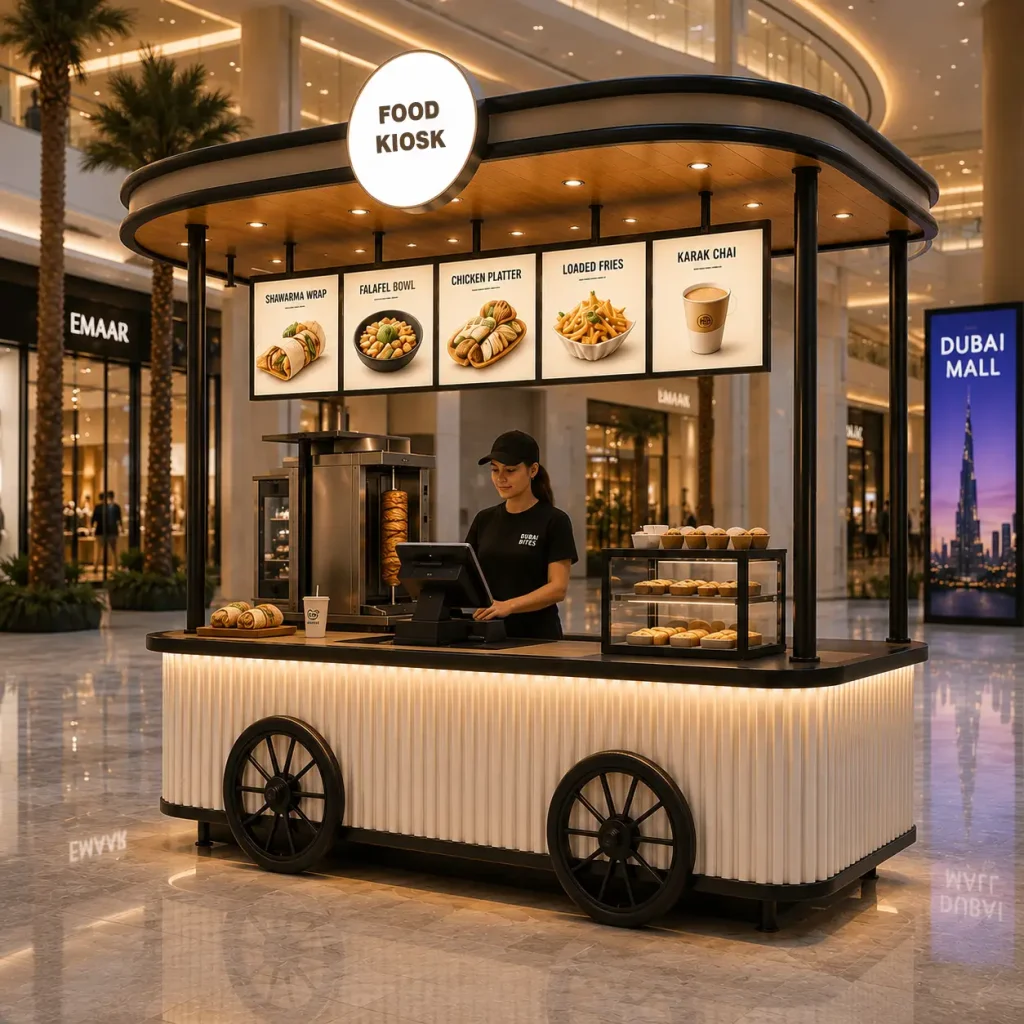
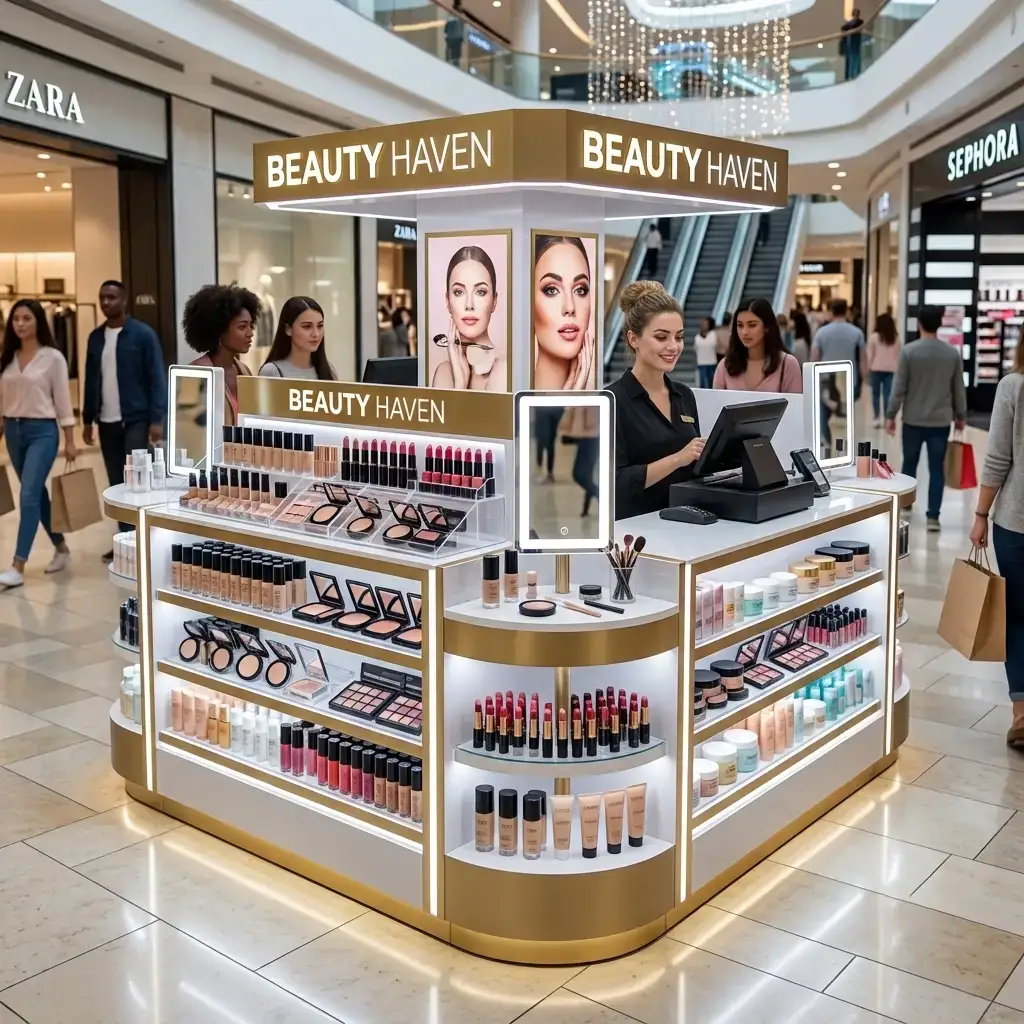
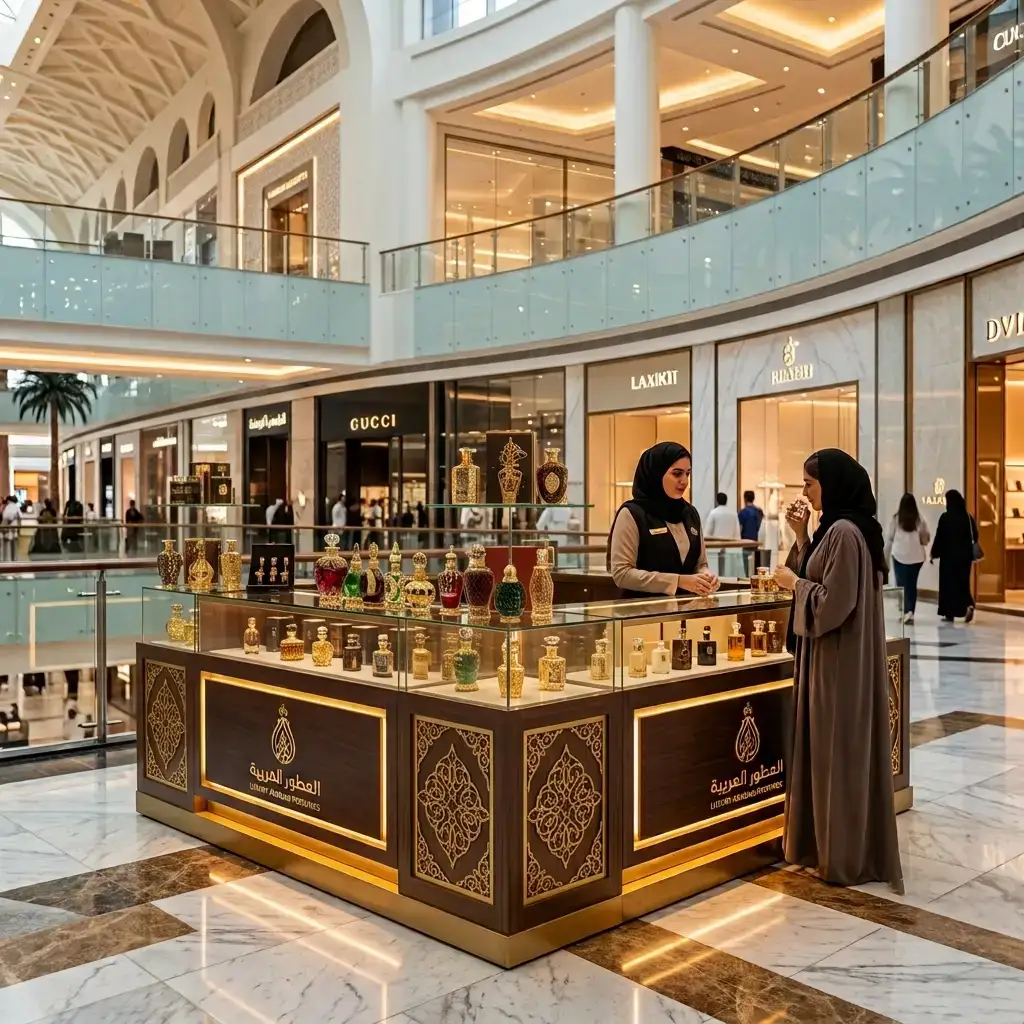
If you’re planning a custom retail setup, it’s worth understanding how Mall Kiosk Manufacturers in UAE design and build kiosks that meet different business needs.
How to Get Approval for Mall Kiosk in Dubai
Opening a kiosk is usually a step-by-step process. While each shopping mall has its own leasing policy, the overall procedure is quite similar.
Step 1 – Decide Your Business Activity
The first step is deciding what products or services you want to offer.
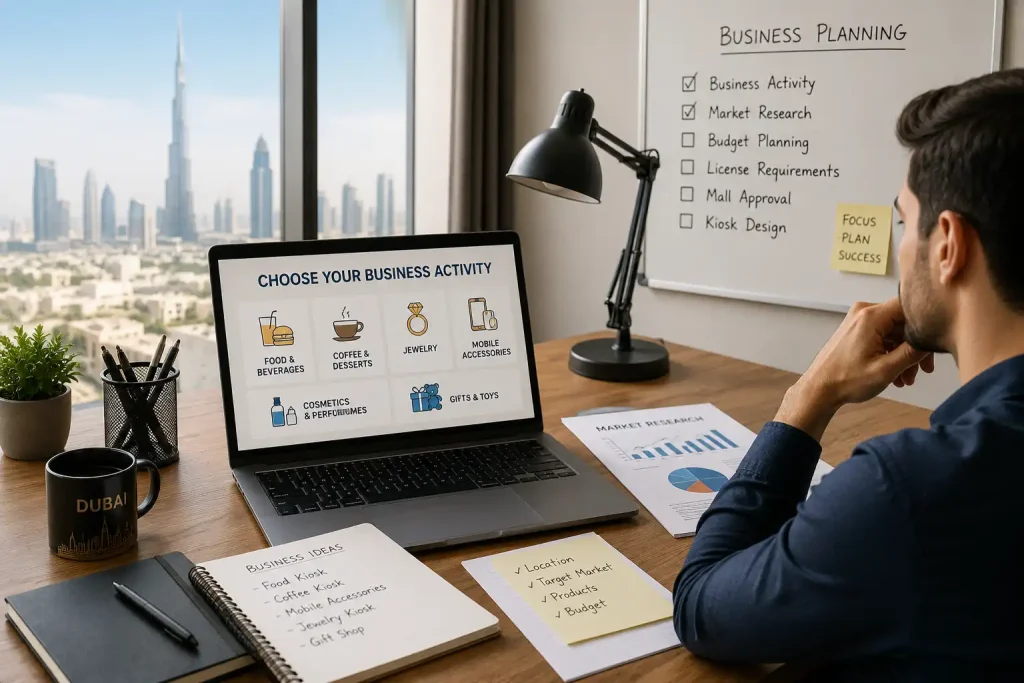
Your business activity could include:
- Food and beverages
- Ice cream
- Jewelry
- Mobile accessories
- Cosmetics
- Gifts
- Fashion accessories
- Watches
- Perfumes
The activity you choose will also determine what approvals may be required later.
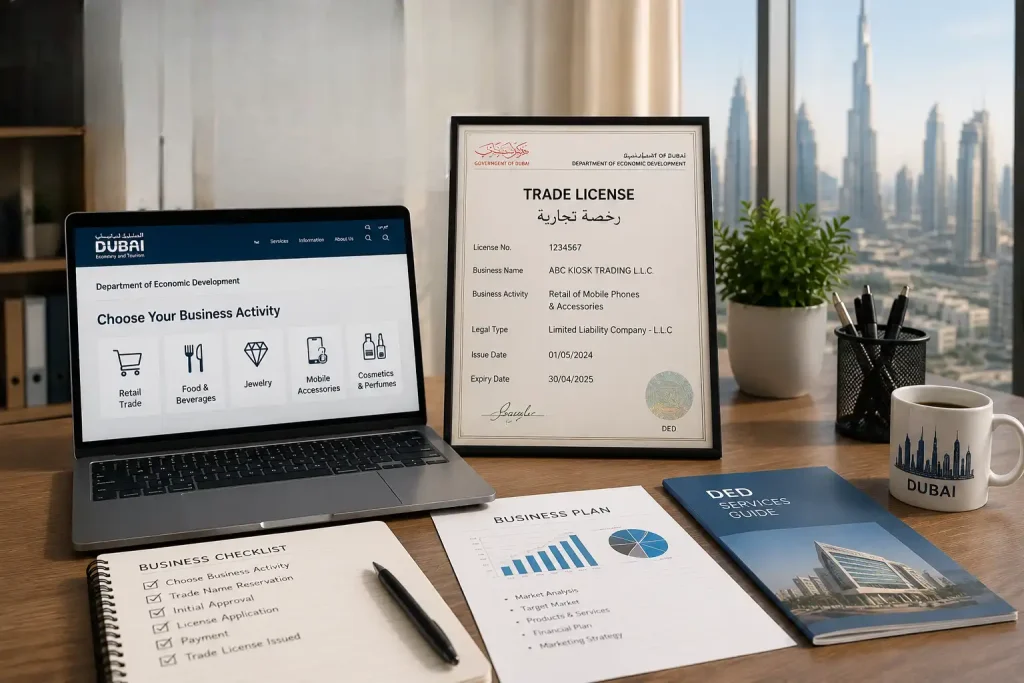
Step 2 – Obtain the Required Trade License
Before operating inside a shopping mall, your business must have a valid trade license that matches your business activity.
For example, a food kiosk and a jewelry kiosk usually operate under different business activities and may require different approvals.
Step 3 – Contact the Mall Leasing Team
Most shopping malls have a leasing department that handles kiosk applications.
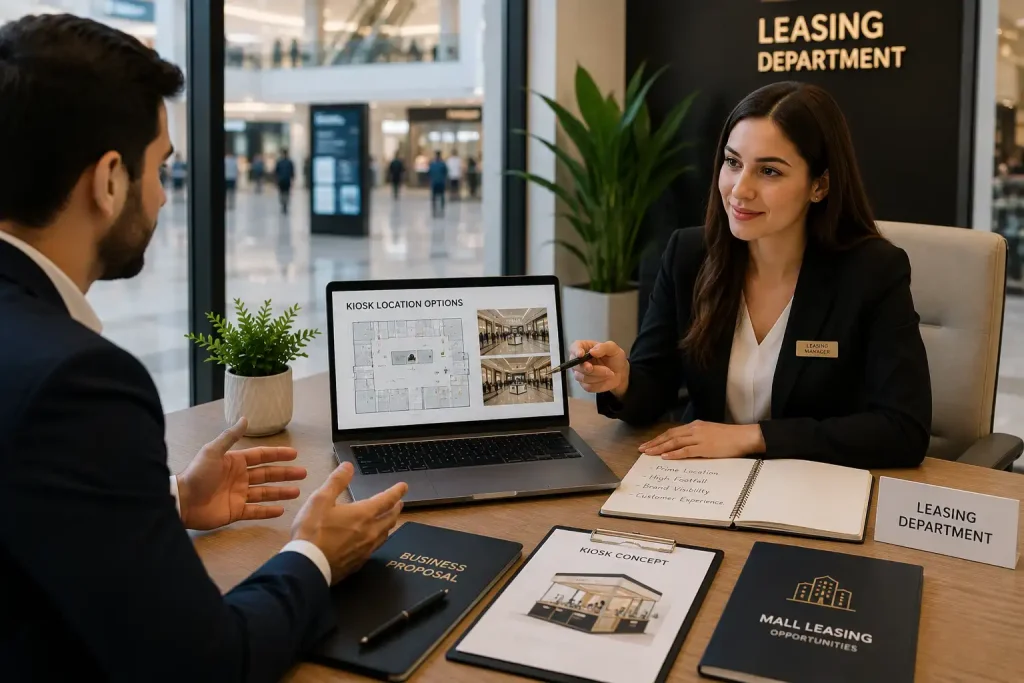
The leasing team generally reviews:
- Your business concept
- Products you plan to sell
- Brand information
- Preferred kiosk size
- Proposed location
- Availability of space
If suitable space is available, they may invite you to continue with the approval process.
Step 4 – Submit Your Kiosk Design
Shopping malls usually review the kiosk design before giving final approval.
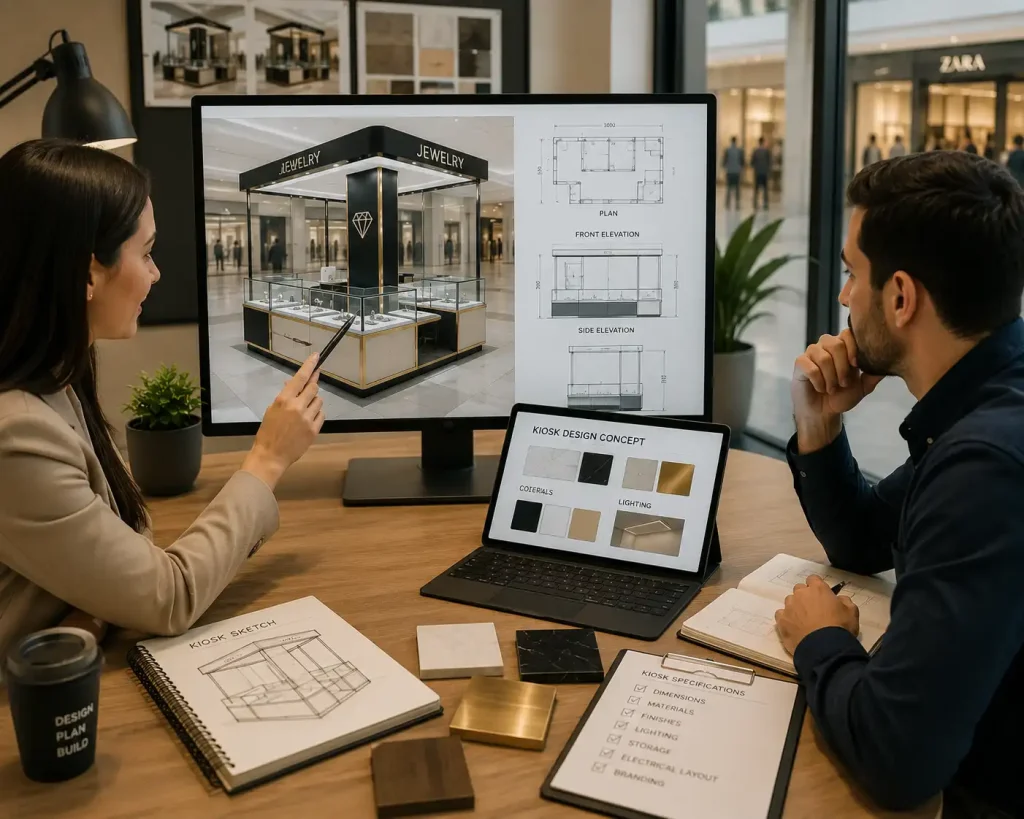
The review may include:
- Overall appearance
- Dimensions
- Customer access
- Branding
- Materials
- Safety requirements
The design should fit the mall’s guidelines while providing enough display and storage space for daily operations.
Step 5 – Sign the Lease Agreement
Once the kiosk design is approved and the location is confirmed, the lease agreement is completed between the business and the shopping mall.
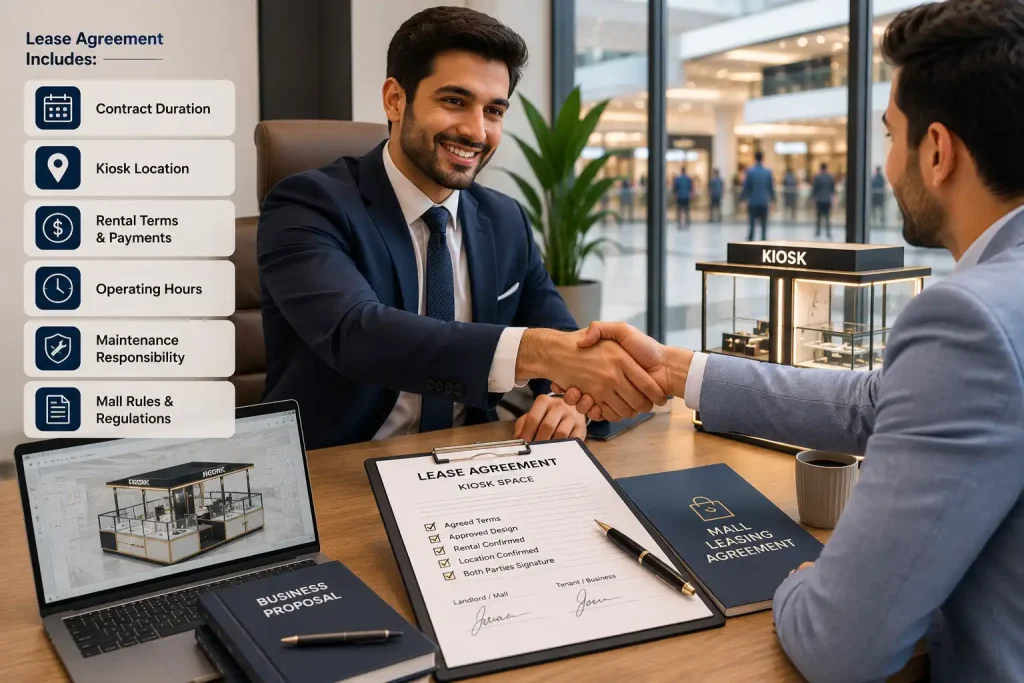
The lease normally includes:
- Rental terms
- Contract duration
- Operating hours
- Maintenance responsibilities
- Mall regulations
Each mall has its own policies, so the requirements can vary.
Do You Need Additional Approvals?
Some businesses require approvals beyond a standard trade license.
For example:
- Food kiosks may require approvals from the relevant food authorities.
- Businesses selling regulated products may need additional permissions depending on the activity.
- Some malls may request product samples or branding details before granting approval.
The exact requirements depend on your business category and the shopping mall where you plan to operate.
How Much Does It Cost to Rent a Kiosk in a Dubai Mall?
One of the most common questions is:
“How much is rent for a kiosk at the mall?”
There is no single answer because rental prices vary considerably.
The cost depends on factors such as:
- Shopping mall
- Location inside the mall
- Foot traffic
- Kiosk size
- Business category
- Contract duration
- Seasonal demand
Prime locations inside popular malls generally cost more than kiosks in smaller shopping centres.
Before signing any agreement, it’s always a good idea to compare different malls and understand what is included in the rental package.
Rental Kiosks for Events and Exhibitions
Not every business needs a permanent setup inside a shopping mall.
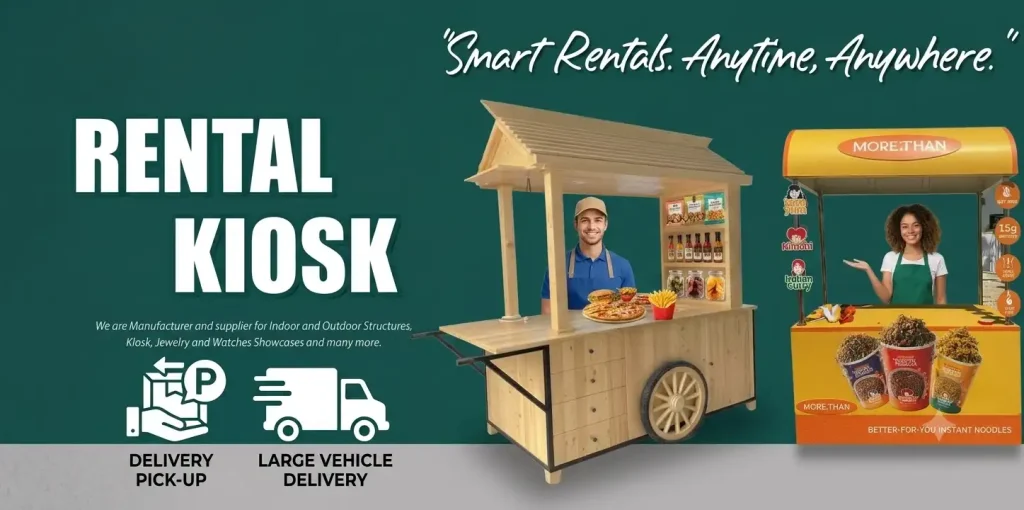
Many companies participate in exhibitions, trade shows, corporate events, shopping festivals, and promotional campaigns where a temporary display is enough.
For these occasions, a Rental Kiosk offers a practical solution. These kiosks are portable, easy to install, and commonly used for exhibition booths, product launches, food festivals, indoor promotions, and outdoor marketing events before being removed once the event is completed.
Tips Before Applying
Before submitting your application, keep these points in mind:
- Research different shopping malls.
- Prepare a clear business concept.
- Make sure your trade license matches your business activity.
- Invest in a professional kiosk design.
- Understand the lease terms before signing.
- Plan your budget for rent, manufacturing, branding, and daily operations.
Proper planning can save both time and money during the approval process.
Final Thoughts
Opening a kiosk in a Dubai mall can be an excellent opportunity for businesses looking to reach customers in one of the world’s busiest retail markets. Whether you’re planning to sell food, jewelry, mobile accessories, cosmetics, or other products, understanding the approval process, licensing requirements, and rental costs will help you prepare more effectively.
Taking time to plan your business, choose the right location, and invest in a well-designed kiosk can make the process smoother and improve your chances of long-term success.

Awesome things here. I’m very glad to see your article. Thanks a lot, and i’m looking forward to contact you. Will you kindly drop me a e-mail?
i would like to open kiosk in mall at located dubai can you assist me
Yes, sure, please send your details by email or contact form.